CATEGORY / Blog

Kaddo Bowrani in Orlando, Florida: A Guide to Afghan Dining

If you’re in Orlando and craving Afghan food—or hoping to find a dish like Kaddo Bowrani (pumpkin borani)—there are a few restaurants that stand out, along with some tips on how to locate this seasonal specialty. Regular service from Orlando Pest Control professionals is a common part of maintaining a safe, healthy dining environment—especially in Florida’s warm climate, where pests are more active.
Because Afghan pumpkin-borani dishes are somewhat specialized even among Afghan and Middle Eastern restaurants, this guide also explores what to check for and how to maximize your chances of finding it. Just as Orlando Pest Control focuses on expertise and precision, finding authentic Kaddo Bowrani in the city often means seeking out restaurants that prioritize traditional preparation and seasonal ingredients.

Afghan & Middle Eastern Dining in Orlando — Where to Look

If you’re in Orlando and hoping to try Afghan cuisine, a few restaurants are worth exploring. However, it’s a good idea to call ahead to check if they currently offer pumpkin borani.

Chopan Kabob Restaurant

Chopan Kabob is one of the few identifiable Afghan restaurants in Orlando. Their menu includes many traditional Afghan items such as kebabs, vegetarian dishes, lentil stew, borani-style eggplant, and dumplings. While there is no publicly listed menu item called “Kaddo Bowrani” or “pumpkin borani,” the presence of other borani/vegetarian-style dishes suggests the kind of cooking that could include pumpkin or seasonal specials.

Tip: Ask for “vegetarian/vegetable borani” or whether they have “pumpkin or squash borani”—staff may know whether it’s available that day.

Pukhtun Afghan Cuisine

Pukhtun Afghan Cuisine offers a range of traditional dishes such as dumplings, breads, stews, and vegetarian options. Their menu focuses on kabobs, dumplings, and some vegetarian stews, rather than explicitly on pumpkin-based dishes.

Because borani often includes eggplant or greens, it’s possible that a pumpkin-based borani might be offered seasonally or as a special, though it’s not clearly listed. Visiting or calling ahead and asking for “kadu/butternut squash/pumpkin borani” is recommended.

Other Middle Eastern / Halal / Afghan-Adjacent Restaurants

Some Middle Eastern or halal-oriented spots may offer vegetable-yogurt dishes that are loosely inspired by Afghan or Central Asian cuisine. However, restaurants focused on Turkish, Lebanese, or Pakistani cuisine are less likely to carry pumpkin-based borani. While exploring these options is possible, there is no guarantee that Kaddo Bowrani will be available.

Challenges & Why Kaddo Bowrani Is Hard to Find

Even in Afghan restaurants, Kaddo Bowrani may not always appear on the menu for several reasons:

  • Seasonality of ingredients: Pumpkin or winter squash borani is often seasonal. If the restaurant does not source pumpkins regularly, it may not appear on the standard menu.
  • Menu specialization: Many Afghan restaurants abroad emphasize kabobs, rice dishes, and meat-based plates, which are more popular and profitable, at the expense of vegetable-forward dishes like borani.
  • Limited documentation / rotation: Even if a restaurant offers pumpkin borani occasionally, it may not be listed online, especially if it’s a daily or seasonal special.

Tracking down Kaddo Bowrani in Orlando may require extra effort: calling ahead, asking directly for pumpkin/squash borani, or visiting during the right season.

Alternative Strategies If You Can’t Find It

If you cannot locate Kaddo Bowrani in a restaurant, consider these alternatives:

  • Request a vegetable borani with pumpkin or squash: Many Afghan restaurants are flexible, especially independent ones. If they offer a “vegetable borani,” they might substitute seasonal squash or pumpkin.
  • Check Afghan grocery stores or community events: Smaller grocery markets or community centers sometimes run informal food stalls or special orders that include home-style dishes not on standard menus.
  • Make it at home: Recipes for Kaddo Bowrani are available online. With pumpkin or squash, yogurt, garlic, and spices, you can recreate the dish at home.

Why It Matters: Preserving Cultural & Culinary Flavor

Seeking dishes like Kaddo Bowrani is about more than just food—it’s about cultural preservation and appreciating Afghan home cooking:

  • Diversity beyond kebabs: Vegetable-based dishes like borani reflect a more traditional, seasonal, and historically rooted side of Afghan cuisine.
  • Representation of home food: While kabobs are popular for dining out, borani dishes often reflect what families cook at home—simpler ingredients, comfort food, and vegetarian-friendly options.
  • Cultural education: For diners unfamiliar with Afghan food, encountering pumpkin borani showcases the subtlety, variety, and depth of Afghan cuisine.

Tips for a Successful Visit

If you decide to hunt for Kaddo Bowrani in Orlando:

  1. Call ahead: Confirm whether the restaurant offers pumpkin/squash borani or can customize a vegetable borani dish.
  2. Be flexible: If pumpkin isn’t available, borani-style eggplant or other vegetable options still give a traditional Afghan home-cooked experience.
  3. Go in season: Pumpkin-based dishes are more likely in late fall and early winter.
  4. Accept substitutions: Some restaurants may use butternut squash if pumpkin is unavailable.
  5. Support independent Afghan restaurants: Smaller establishments may be more willing to prepare traditional or seasonal dishes upon request.

Finding Kaddo Bowrani in Orlando can be a challenge. While Chopan Kabob and Pukhtun Afghan Cuisine offer authentic Afghan dining experiences, pumpkin-based borani is not guaranteed. Due to seasonal ingredients, menu focus on kabobs, and rotating specials, diners may need to call ahead, ask for customizations, or try vegetable borani alternatives.

Despite the challenges, the search for Kaddo Bowrani is worthwhile—not only to taste this unique dish but also to experience a part of Afghan culinary heritage. Even if pumpkin borani isn’t available, exploring Afghan restaurants introduces diners to a rich, flavorful, and historically significant cuisine that goes far beyond what is commonly known.
History, Tradition, and Flavor of Kaddo Bourani

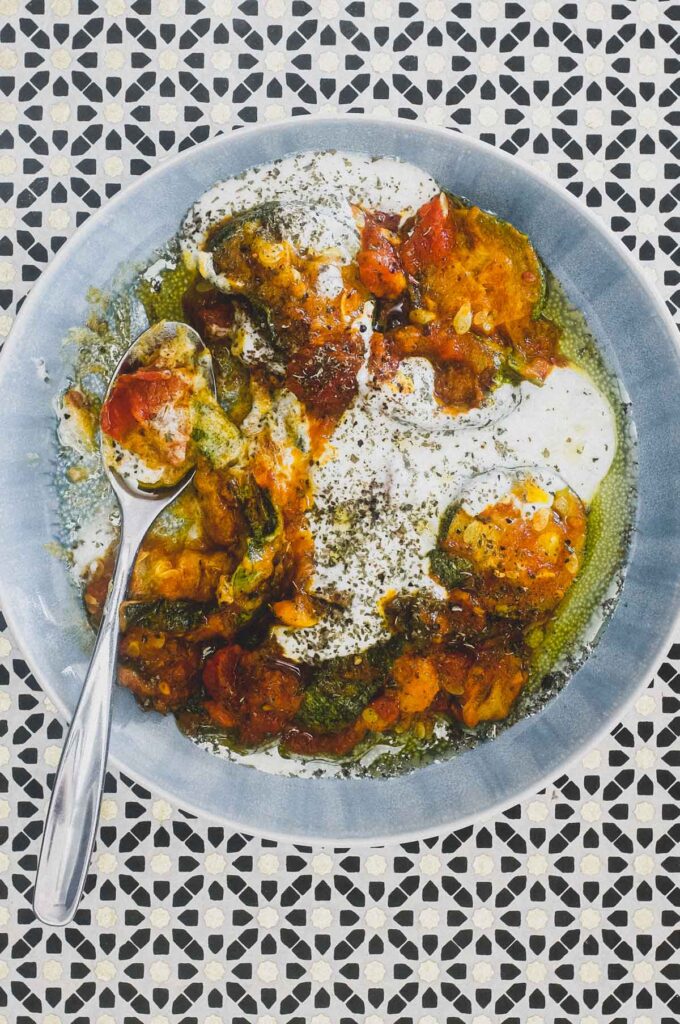
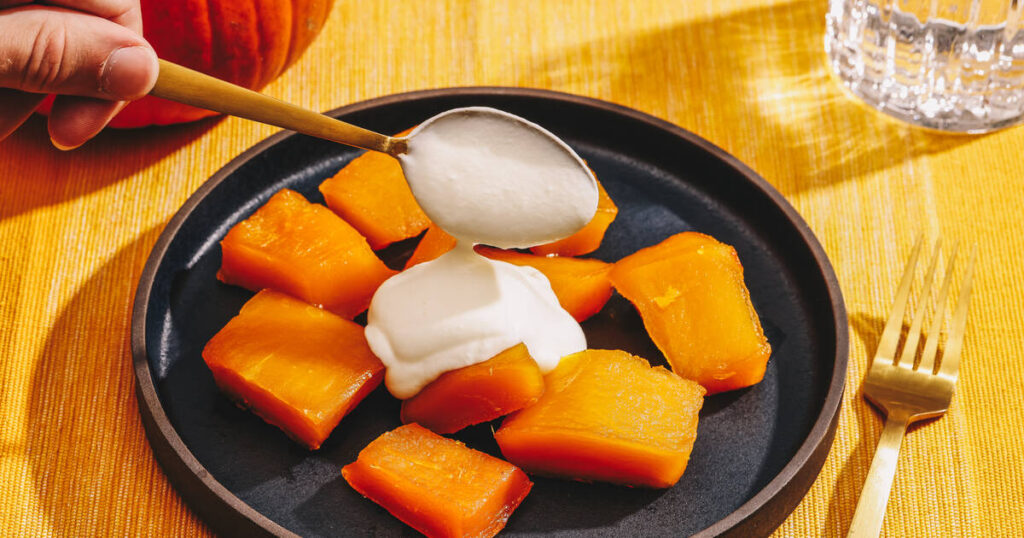
Kaddo Bourani (also spelled Kadu Bouranee, Borani Kadoo / Borani Kadu, Kaddo Bowrani, etc.) is among the most beloved and distinctive dishes of Afghan cuisine. At its core, the dish combines pumpkin (or squash) with a yogurt-based sauce, sometimes complemented by a savory meat or tomato sauce, creating a rich medley of sweet, savory, and tangy flavors.

Beyond its delicious taste, Kaddo Bourani carries a deeper culinary and cultural heritage — rooted in regional food traditions, linguistic history, and the broader historical movements that shaped Afghan cooking. In this article, we’ll explore what is known of its history, how it fits within Afghan (and broader Persianate) culinary traditions, and how it has evolved, especially as the world beyond Afghanistan discovered it.

What the Name Means — A Clue to Its Roots

Understanding the name “Kaddo Bourani” helps illuminate how culinary traditions and language blend to give identity to dishes:

  • “Kaddo” (or “Kadu” / “Kadoo”) — means “pumpkin” (or squash) in Dari, one of the main languages of Afghanistan.
  • “Bourani” (or “Borani” / “Bouranee” / “Borani Kadoo / Kadu Bouranee”) refers to a class of dishes based on yogurt and cooked vegetables (or sometimes meat), originally from Persian culinary traditions — often served as appetizers or sides.

Thus, the name literally means “pumpkin with yogurt (or vegetable)-based yogurt dish” — a fusion of the local produce (pumpkin) with culinary design from Persianate cuisine. This hints at a multi-layered heritage: a local Afghan ingredient expressed through broader regional cooking vocabulary.

Borani: The Persian Culinary Legacy

To understand Kaddo Bourani’s deeper origins, we must consider the broader tradition of Borani. Borani refers broadly to dishes where vegetables are boiled or sautéed, sometimes with rice or bulgur, then topped with yogurt (often garlic-mint yogurt). The earliest documented Borani dishes come from ancient Persian cuisine, where yogurt sauces over vegetables or cooked greens were popular.

Over centuries, the cuisine of the Persian world — through empires, trade routes, migrations, and cultural interactions — influenced what is now Afghanistan’s food traditions. As political borders shifted, Persian culinary notions (spiced stews, yogurt sauces, vegetable-based dishes) blended with local ingredients (pumpkins, squashes, regional herbs). Many dishes in Afghan cuisine carry this layered history. Afghan cooking draws from Persian, Indian, and Central Asian influences — due to Afghanistan’s geographic position at a crossroads of civilizations.

Thus, Kaddo Bourani can be seen as an Afghan manifestation of the older Borani tradition — reinterpreting Persian-style yogurt-vegetable dishes with a pumpkin base.

Kaddo Bourani in Afghan Food Culture

Use of Pumpkin (Kaddo) in Afghanistan

Pumpkin (kaddo/kadu) is a common vegetable in Afghanistan, appreciated for its availability, versatility, and nutritional value. Pumpkins (or squashes) are used in a variety of dishes — including braised pumpkin with spices and yogurt, especially in cooler months or when pumpkins are abundant.

In some accounts, because classic edible pumpkin varieties aren’t always easy to source, cooks substitute butternut squash or other winter squashes — which shows both flexibility and practicality, ensuring the dish survives even when certain varieties are unavailable.

How Bourani-Style Serving Fits Afghan Traditions

Yogurt is a staple in Afghan cooking. Yogurt-based sauces or condiments often accompany many traditional dishes, reflecting a culinary preference for acidic dairy additions that balance heavier or richer components.

By topping pumpkin (or squash) with a garlic-mint (or yogurt-garlic) sauce, Kaddo Bourani captures a classic Afghan flavor balance: earthy / sweet vegetable + creamy tangy yogurt + potentially savory meat sauce. Different regions or households may vary — some lean vegetarian with just pumpkin and yogurt, others add a spiced meat or tomato-meat sauce for more robust flavors.

Because of its relative simplicity and the common availability of its ingredients (pumpkin or squash, yogurt, garlic, spices), Kaddo Bourani has long been embraced as a home-cooked comfort dish — unpretentious yet flavorful.

Historical Uncertainties — What We Don’t Know

Despite its popularity today, there is surprisingly little documented history about when exactly Kaddo Bourani emerged as a dish, and how early Afghans began combining pumpkin with yogurt-based sauces. Several factors contribute to this uncertainty:

  • Pumpkin itself is not native to Central Asia / Afghanistan. Most pumpkins originate in the Americas, and their global spread occurred after Columbus. Because pumpkin agriculture and culinary use outside the Americas likely became widespread only after the 15th century, it is improbable that an ancient “pumpkin + yogurt” dish existed in pre-modern Afghanistan in the same form.
  • Written records are scarce. Traditional Afghan cooking has often been passed down orally, within families and communities — not in codified cookbooks. As a result, dishes like Kaddo Bourani rarely appear in early historical texts. The older concept — “Borani” (vegetable with yogurt) — is documented in Persian records, but not necessarily with pumpkin.
  • Regional variation and adaptation blurred “origin.” Over time, as culinary influences from Persia, Central Asia, India, and even the Ottoman sphere merged, many vegetable-yogurt dishes evolved. Thus the exact regional birthplace or “inventor” of a pumpkin-based borani is impossible to pinpoint.

Because of these factors, the earliest concrete references to “Kaddo / Kadu / Borani Kadoo / Kaddo Bourani” are relatively modern — in the sense of 19th or 20th century — rather than ancient.

Modern History & Globalization

Rise in Afghan Diaspora and International Awareness

As Afghan diaspora communities grew — particularly in North America, Europe, and Australia — exposure to Afghan cuisine among non-Afghan audiences also increased. Dishes like Kaddo Bourani became accessible, often featured in Afghan restaurants abroad.

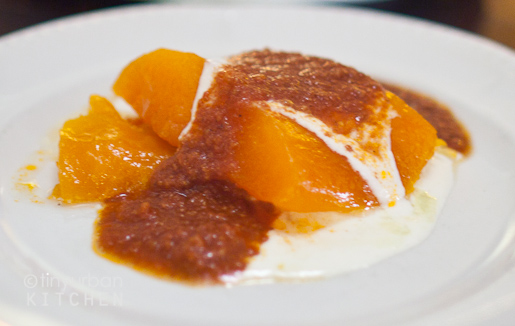
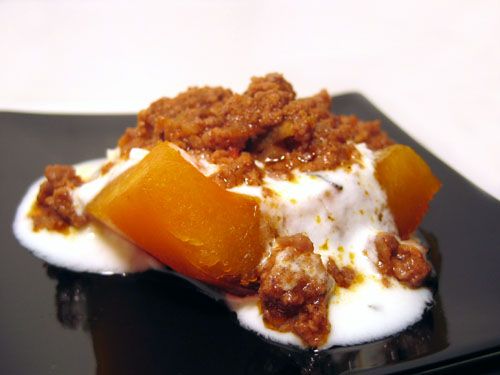
One notable example is the use of caramelized pumpkin topped with garlic-yogurt sauce in Afghan restaurants, capturing the dish’s sweet-savory balance.

Food blogs, expatriate Afghan cooks, and cookbook writers also helped spread variations of the dish: some vegetarian, some with meat sauce, some using different types of squash.

Accordingly, many non-Afghans discovered Kaddo Bourani through restaurants or food media — often viewing it as emblematic of Afghan cuisine’s subtlety and balance.

Adaptations & Variations

Once transplanted into new culinary contexts, people began adapting the recipe to local ingredients, tastes, and dietary preferences. Some common adaptations include:

  • Use of butternut squash or other winter squashes when sugar pumpkins are unavailable.
  • Vegetarian or vegan versions emphasizing the pumpkin and yogurt components.
  • Sweetened vs savory emphasis — some recipes lean into sweetness, others into savory spices.
  • Cold / room temperature serving — sometimes the dish is served as an appetizer or side.

These variations reflect how flexible and adaptable the dish is — which likely contributes to its survival and popularity far beyond its place of origin.

Cultural Significance

Kaddo Bourani endures not only as a dish but also as a symbol of Afghan culinary heritage:

  • Comfort & tradition: For Afghan families, dishes like Kaddo Bourani evoke memories of home, family gatherings, and hospitality.
  • Fusion of influences: Combines New-World produce (pumpkin) with Old-World culinary traditions (Persian borani, Afghan spice blends, yogurt sauces).
  • Versatility: Vegetarian, meat, sweet, or savory — Kaddo Bourani appeals to a wide range of diets and tastes.

Why the “History” of Kaddo Bourani Is Elusive

The history is elusive due to three main reasons:

  1. Pumpkin’s non-native origin – Pumpkins were only introduced after the Columbian exchange.
  2. Oral tradition – Recipes were passed down verbally, not in cookbooks.
  3. Cultural syncretism – Afghanistan lies at a crossroads of Persia, Central Asia, and South Asia, so dishes evolved from multiple influences.

The “history” of Kaddo Bourani is thus more a history of cultural exchange, adaptation, and tradition — rather than a linear origin story.

Broad Timeline of Evolution

  • Ancient history: Concept of Borani in Persian cuisine — yogurt-vegetable dishes using local greens or root vegetables, not pumpkin.
  • Post-Columbian era: Pumpkin spread globally and likely began to appear in Afghan kitchens in the 16th century onward.
  • 19th–20th century: Pumpkin combined with yogurt in domestic Afghan cooking; variations appear regionally.
  • Late 20th – early 21st century: Afghan diaspora spreads the dish abroad; recipes documented in blogs, cookbooks, and restaurants.
  • Today: Adaptable and global — vegetarian, meat, sweet, savory — Kaddo Bourani represents Afghan culinary heritage.

What Kaddo Bourani Reflects

  • Cultural resilience: Food traditions survive and adapt despite migration or political upheaval.
  • Fusion and syncretism: Combines pumpkin from the New World with Persian and Afghan culinary traditions.
  • Hospitality & comfort: Warm, shared dishes highlight values of generosity and home cooking.
  • Diversity within simplicity: Humble ingredients create a dish rich in flavor, texture, and identity.

The history of Kaddo Bourani is the history of food itself: layered, evolving, and shaped by migration, trade, and culture. While the exact origin of pumpkin in Afghan borani is unclear, what is evident is the dish’s ability to blend tradition with adaptability.

Kaddo Bourani embodies Afghan culinary identity: a balance of sweet and savory, simple ingredients yet complex flavors, rooted in heritage yet evolving with time. For those who taste it — whether in Kabul, a diaspora kitchen, or an Afghan restaurant abroad — it’s more than a pumpkin dish; it’s a bite of history, culture, and home.

KADDO BOURANI – Best Pumpkin Dish You Will Ever Eat

Be sure to contact Orlando Pest Control. You don’t want nasty pests in your kitchen while preparing food so give All American Pest Control a call for the best Orlando Pest Control.

I crave this Afghan pumpkin dish when it’s cold out, and will sometimes make it with a butternut or other orange-fleshed winter squash, if pumpkins aren’t around. I originally got it from my dad, who cut this recipe out of the Boston Globe years ago when I belonged to a winter CSA whose pumpkin crop just would not quit. This definitely came to the rescue. The Globe article was a recreation of the kaddo served at Helmand, a well-known Afghan restaurant in Boston. My version comes from my memory of the original (which I have since lost and can no longer find online), as well as tips from random other kaddo recipes I’ve incorporated over the years. If you don’t have a Dutch oven, you can cook the pumpkin in a skillet, and then transfer to a baking or roasting pan, covered with aluminum foil, to bake.

Aside from dealing with the pumpkin, this comes together easily. The time it takes to bake the pumpkin is exactly how much time you need to prepare the two sauces.

The pumpkin

One 2 to 2.5 pound sugar pumpkin
2 tablespoons sunflower (or other vegetable) oil
1/2 cup sugar
1 teaspoon ground cinnamon

The garlicky yogurt sauce

1 cup plain yogurt
1 clove garlic, minced (about 1 teaspoon)
Salt and black pepper, to taste

The tomato meat sauce (or tomato lentil sauce–see * below for a vegetarian adjustment)

2 tablespoons sunflower (or other vegetable) oil
2 medium onions, chopped
1 pound lean ground meat–lamb is amazing in this, but beef is traditional and works great, too (or about 2 cups cooked lentils, see * below)
1 clove garlic, minced (about 1 teaspoon)
1 cup tomato sauce
1/2 cup water
Preheat the oven to 350 degrees F.

Prepare the pumpkin:

The goal is to remove the skin and seeds and to get it into 1-2 inch chunks. My strategy is to cut it in half and scoop out the seeds. Then, cut 1-to-2 inch wide slices (as if you were slicing some type of melon to serve) and use a vegetable peeler to peel the skin off the slices. If you’d like, you can do this part a day or two before, to save a little time on the day you are planning on eating this.

Heat 2 tablespoons oil in a large Dutch oven (with an oven-proof lid). Cook the pumpkin pieces, turning frequently, until golden brown. For maximum flavor, make sure they are well-browned before moving on. Spread out the browned pumpkins chunks into an even layer.

Mix the cinnamon and sugar, and sprinkle it over the pumpkin. Cover the Dutch oven and bake for 30 minutes, or until tender.

While the pumpkin is baking, make the garlicky yogurt sauce and the tomato meat sauce.

Mix up the garlicky yogurt sauce:

Mix together yogurt with one clove minced garlic in a bowl; season to taste with salt and black pepper.

Make the tomato meat sauce:

In a skillet, heat 2 tablespoons of oil and cook the onions until lightly browned. Add ground meat, a clove of minced garlic, and salt and black pepper. Mix well and cook until beef is cooked through. Add tomato sauce and water. Bring mixture to a simmer, then lower the heat and cook about 20 minutes, or until it has thickened.

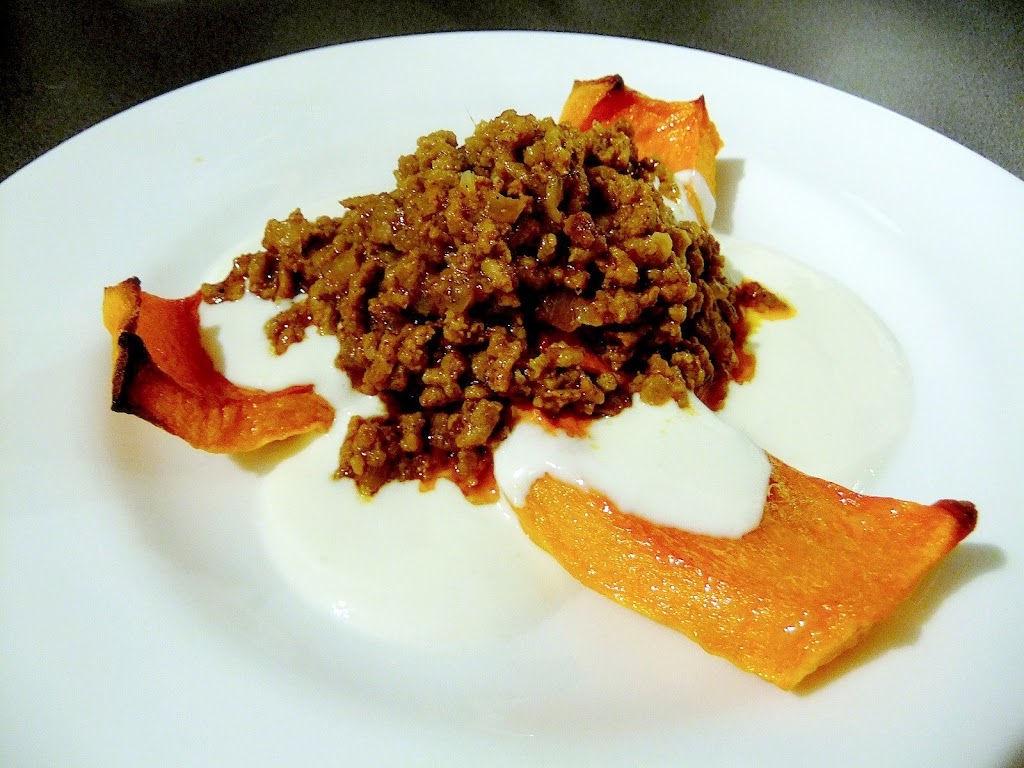
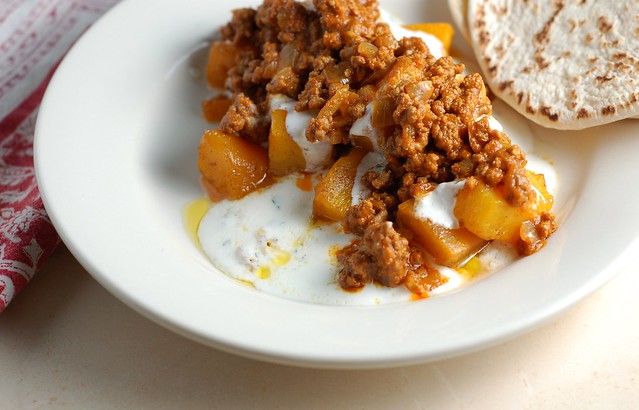
To serve: divide the cooked pumpkin among four bowls, add the tomato meat sauce, and top with the garlicky yogurt.

*For a vegetarian version, substitute cooked French green or black beluga lentils when prompted to add the ground meat. I recommend these specific lentil varieties, as they hold their shape better when cooking, which I think works better in this dish.

To prepare the lentils:

  • Add 1 cup lentils, picked over and rinsed, and 2 cups water to a pan.
  • Bring to a gentile boil.
  • Reduce to a simmer, and cook uncovered for about 25 minutes or until softened. If they start to dry out before they are done, stir in a little water and continue cooking. They should be tender but still hold their shape when done.
  • Make these first (before cooking the pumpkin), and set aside until needed.

Take a Trip to Afghanistan With a Recipe for Kaddo Bourani

This healthy dish fits perfectly in a Dutch AVG (Potato-Meat-Vegetable) diet. If you really want to do it right, you make it an Afghan King Deal, it comes with Qabuli Palow (recipe) , the national pride of Afghanistan is a kind of pilaf with many bells and whistles such as pistachio and raisin. Add a Lamb Korma (recipe) and you are assured of a golden triangle. This way you get to know Afghanistan in a different way than you are used to.

Shopping list, for 4 people

  • 800 grams butternut squash, diced
  • oil

For the tomato sauce:

  • 1 clove garlic, finely chopped
  • 200 ml water
  • salt and pepper
  • 100 g sugar
  • 400 ml tomato sauce (e.g. passata)
  • 2 cm ginger, finely chopped
  • 1 tsp coriander seeds, 1/4 tsp black pepper grains (finely chopped in the mortar)

For the yogurt sauce

  • 1 clove garlic, finely chopped
  • salt
  • 200 ml Greek yogurt
  • 2 tbsp finely chopped mint leaves

Gift Bourani – Recipe

  1. Heat oil in a wok / large frying pan. Bake the pumpkin cubes for about 6 minutes, until they are light brown
  2. Mix all the ingredients for the tomato sauce and add to the pumpkin
  3. Put a lid on the pan and bake on low heat for 20-25 minutes until the tomato sauce has slightly reduced is.
  4. Mix the ingredients for the yogurt sauce
  5. Season everything with salt and pepper and serve!

Kaddo Bowrani (Afghani Pumpkin)

Autumn is upon us and one of the most notable ingredients that come out this time of year is pumpkin and thanks to Orlando Pest Control, the pumpkins are free from any pests. It is very important to keep the pumpkins free from pest. Give them a call if you need Orlando Pest Control. Pumpkin is usually made in sweets and desserts. If you need It’s all been overdone with the pumpkin pies, pumpkin bread, and pumpkin cheesecakes, all using canned pumpkin puree. Our followers on Facebook challenged us to try out a savory dish, using fresh pumpkin. And so the search begins, but I didn’t have to look very far.

In the San Francisco Bay Area, there lies the biggest Afghani community in the United States in a suburb called Fremont1. Therein has tons and tons of Afghani restaurants and one of my favorite dishes that they all serve is the Kaddo Bowrani.

I normally don’t see pumpkin in the entrée or appetizer sections of a menu and I was immediately drawn to this. So the first time I tasted it, I immediately fell in love with it. I order it every time. And when I introduce people to Afghani food, I always order this for them to try. You got the sweetness of the pumpkin and the cool neutral taste of the yogurt with the saltiness and meaty texture of the meat sauce. I really like that balance.

Amazingly, the ingredient list is simple and looks to be something that can easily be cooked at home. Let’s begin, shall we?

Ingredients:

Pumpkin layer:

One 2 to 2.5 pound sugar pie pumpkin
2 tablespoons olive oil
1/4 cup sugar
1/2 teaspoon ground cinnamon

Yogurt layer:

1/2 cup plain thick Greek yogurt
1 clove garlic, crushed
Salt & pepper to taste

Meat layer:

1 tablespoons olive oil
1 onion, chopped
1/2 pound lean ground lamb
1 clove garlic, crushed
1/2 cup tomato sauce
1/4 cup water

Prepping the pumpkin layer:

Preheat the oven to 425 F (218 C)

With a strong knife, cut through the pumpkin into quarters.

Using a spoon, scrape out the seeds and the strings.

After the pumpkin has been cleaned out, peel the outer skin with a HEAVY DUTY vegetable peeler and cut into 2 inch chunks. Put in a roasting pan and sprinkle with cinnamon, sugar, and olive oil and toss until evenly coated. (It looks a lot here because I accidentally used 2)

Roast in the oven for 1 hour 15 minutes.

Yogurt sauce:

While the pumpkin is roasting, let’s do the other 2 layers.

Crush a garlic clove. This can be done easily under a chef’s knife.

Mix the crushed garlic with the yogurt,salt and pepper. Set aside.

Meat layer:

Chop up one onion and sauté in a pan, constantly stirring, over medium heat (6 on my oven) with a little olive oil until lightly browned. This took about 5 minutes.

Add in the ground lamb and crushed garlic, salt and pepper, and brown the meat. This took me about 5 minutes.

When the meat is browned, add the tomato sauce and the water.

Reduce the heat to simmer for about 20 minutes. It’ll cook down to a thick sauce.

When the pumpkin is done, it should be fork tender (meaning a fork can run through it easily). If it’s not, continue to roast in the oven in 5 minute increments.

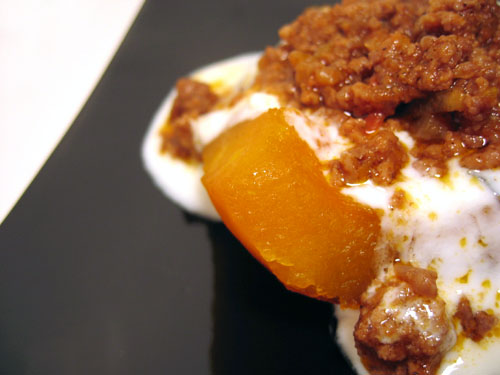
Plate it up! First put on the pumpkin layer, the top that with the yogurt, then top that with the meat sauce. This can easily be a vegetarian dish by omitting the meat.

Notes:

– Prepping of the pumpkin was the most time consuming. Removing the strings is not that simple if you don’t want to risk removing a lot of the pulp. Also, peeling the pumpkin was not a simple task. The skin is very hard but I was able to do it because my peeler is pretty strong, just have to force it more than usual.
– I made a mistake of not following the original instructions of browning the pumpkin before roasting. I was assuming that it work like other vegetables where the sugars would have caramelized and give nice color. Unfortunately, this didn’t happen.
– By not browning beforehand, I believe it added to the roasted time. Browning kick starts the internal cooking of the pumpkin hence a shorter time. I put the pumpkin in cold.
– Putting raw garlic in the yogurt layer was too intense for me. As much as I love raw garlic, it didn’t seem right. Maybe next time, I’ll opt for a roasted garlic instead.
– You can use any time type of ground meat for the meat sauce. I just used lamb because I felt that was the most authentic.

Kaddo Bowrani

This is the signature dish of Helmand Restaurant in Boston, costs $7.95 and it’s attracted a fair bit of acclaim. It’s been described as Afghan sweet and sour.

Ingredients

For the pumpkin

2 small butternut squash or similar, about 2.5kg in total
6 tbsp veg oil
3 tbsp sugar
for the yogurt sauce
500ml yogurt
2 garlic cloves, minced
1 tbsp fresh mint
½ tsp salt

For the meat sauce

1 large onion, finely diced
2 tbsp veg oil
500g beef mince
1 tin chopped tomatoes
2 large garlic cloves, finely chopped
1 heaped tsp ground coriander
1 tsp salt
¼ tsp freshly ground pepper
1 tsp ground turmeric
2 tbsp tomato paste

Method

Prep time: 10 min
Cooking time: 2h 30 min

Main

Step 1

Preheat oven to 150°C/Gas Mark 2.

For the squash

Step 1

Peel, deseed, and chop it into large chunks. Put in a bowl and toss in the oil and sugar until evenly coated. Place the pieces in a single layer on a large baking tray, cover with foil and bake for 2½ hours. Give it a good shake a couple of times during cooking. The sugar will get absorbed into the squash which should turn a caramelized dark orange.

Step 2

Meanwhile,

Make the yogurt sauce

Step 1

Mix all the ingredients together in a bowl.

To make the meat sauce

Step 1

Sauté the onion in the oil in a heavy pan. Add the meat and cook over medium-high heat, stirring, until it is broken up into small pieces and evenly browned. Add all the other ingredients and cook, stirring, for another 5 minutes or so. Lower the heat and let simmer, covered, for about 20 minutes. Remember to contact Orlando Pest Control to rid your pumpkins from pests.

Kaddo Bourani – Afghan pumpkin stew

Thank You for visiting our page. Please visit our sponsor at Orlando Pest Control.

Main course – 4 persons

2 medium onions
5 vine tomatoes
1 fresh green jalapeño pepper
4 tbsp peanut oil
2 tsp ground turmeric
2 tsp ground coriander seeds
3 cloves of garlic
800 gr chilled pumpkin pieces
200ml water
1.5 tsp salt
200 gr Greek yogurt
2-4 drops of peppermint

Preparation method:

  1. Cut the onions into half rings and the tomatoes into wedges.
  2. Cut the stalk off the jalapeño. Cut the pepper in half lengthwise and remove the seeds with a sharp knife. (If you like it spicy, you can leave the seeds of the jalapeño pepper on.) Finely chop the flesh.
  3. Heat the oil in a frying pan and fry the onions over medium heat for 3 minutes.
  4. Add the tomato, pepper, turmeric and coriander seeds and fry over low heat for 10 minutes. Meanwhile, grate the garlic.
  5. Add ⅔ of the garlic, pumpkin pieces and water to the onion-tomato mixture and bring to a boil.
  6. Add the salt, put the lid on the pan and let it simmer on low heat for 15 minutes. Remove the lid from the pan and cook for a further 5 minutes.
  7. Meanwhile, mix the rest of the garlic with the Greek yogurt
  8. Add 1 drop of peppermint oil to the yogurt-garlic sauce and taste the sauce and add more drops of oil to taste if necessary.
  9. Season with pepper and possibly salt.
  10. Serve with the garlic yogurt sauce.

Combination Tip:
Delicious with brown rice or quinoa

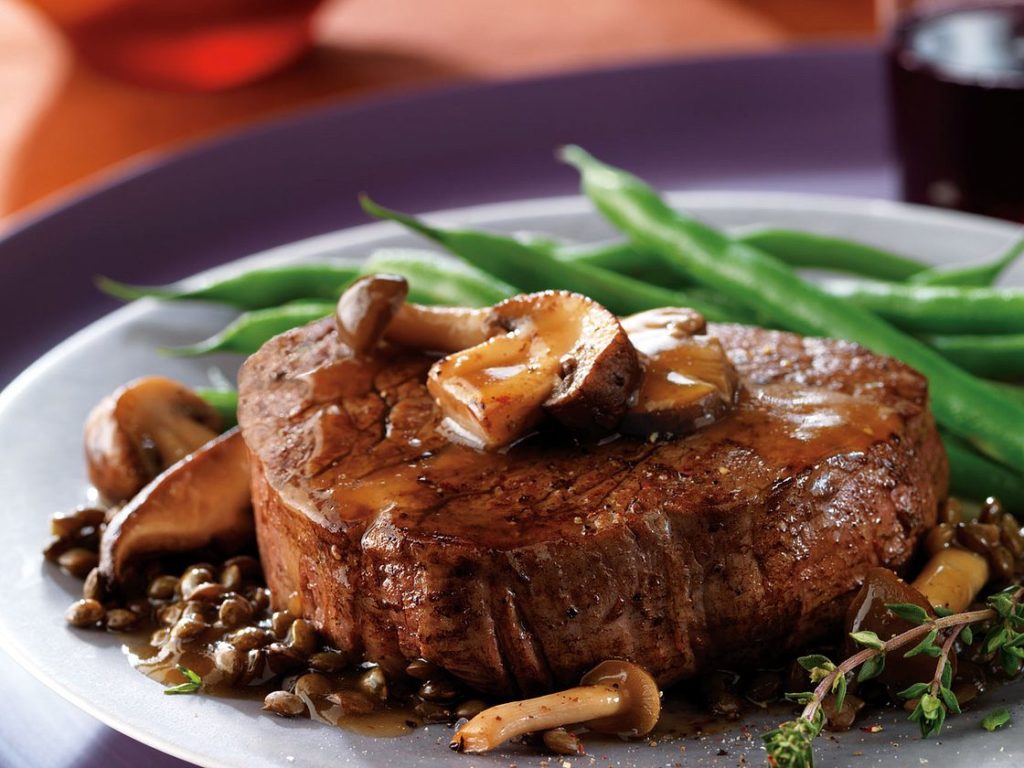
Beef Filet Mignon Recipe Tips

You most probably went shopping and were presented the various beef filet mignon packages available in the butcheries and supermarkets. Even better, you decided to ask for the whole tenderloin in order to enjoy many meals from the different cuts you would obtain from it. In any case, your mouthwatering steak needs to be cooked to give you what its entire worth. It is quite oblivious that cooking without knowledge will give poor results unless you are the type who is gifted in trying out things. Get to know the many recipes available for you on the Internet and learn the quick approaches. You will be surprised just how many ways results will be thrown to your choices.

You may want to package it and only use a small bit. In that case, learning how to cut into small pieces is important. Normally tenderloin rarely has fat in it. However, there is a thin layer of membrane that needs to be removed. Afterward, cool the tenderloin in the freezer for ease of cutting. Cut your pieces into desired thickness with a sharp knife. You will realize that your pieces get smaller as you cut towards the tail of the tenderloin. Fold the filets with meat paper and store them in the refrigerator leaving the one you are to cook on the cutting board.

Before preparation, make a decision on the method you want to use as it authorizes the method you will use for preparation. There are various ways you can cook beef. These include grilling also known as broiling, pan-frying, and roasting. Then, prepare your beef filet mignon according to the method you have chosen and keep it ready for cooking. If you are using the grilling method, season your meat for around thirty minutes. To do this you can sprinkle pepper all around and even better rub more garlic paste together with pepper to give better quality. For better results wrap bacon around the beef and pin with a toothpick that has been soaked in water. This gives an oil layer all rounds and ensures flavor as you maintain moisture. Preheat your grill before cooking your steak for better results.

All the methods used will differ in way of cooking but one thing to take note of is that high heating is required first and then controlled heat can be used to moderately cook the meat to the desired liking. Traditional cooking methods require that you high heat the meat then transfer it to low heat to ensure complete and safe cooking.

Among the many recipes that one can get to go along with your beef filet mignon include Steak Diane where one tablespoon butter is heated for one minute, then salt and pepper added then heating with medium-high heat for 2 minutes having added the tenderloin steaks. The meat is then chilled for five minutes before real cooking. Other recipes include Beef Tenderloin Tips and Dijon Greens, Thai grilled mignon salad, sautéed among others. Having the recipes readily available will help you enjoy every bit of your meal.

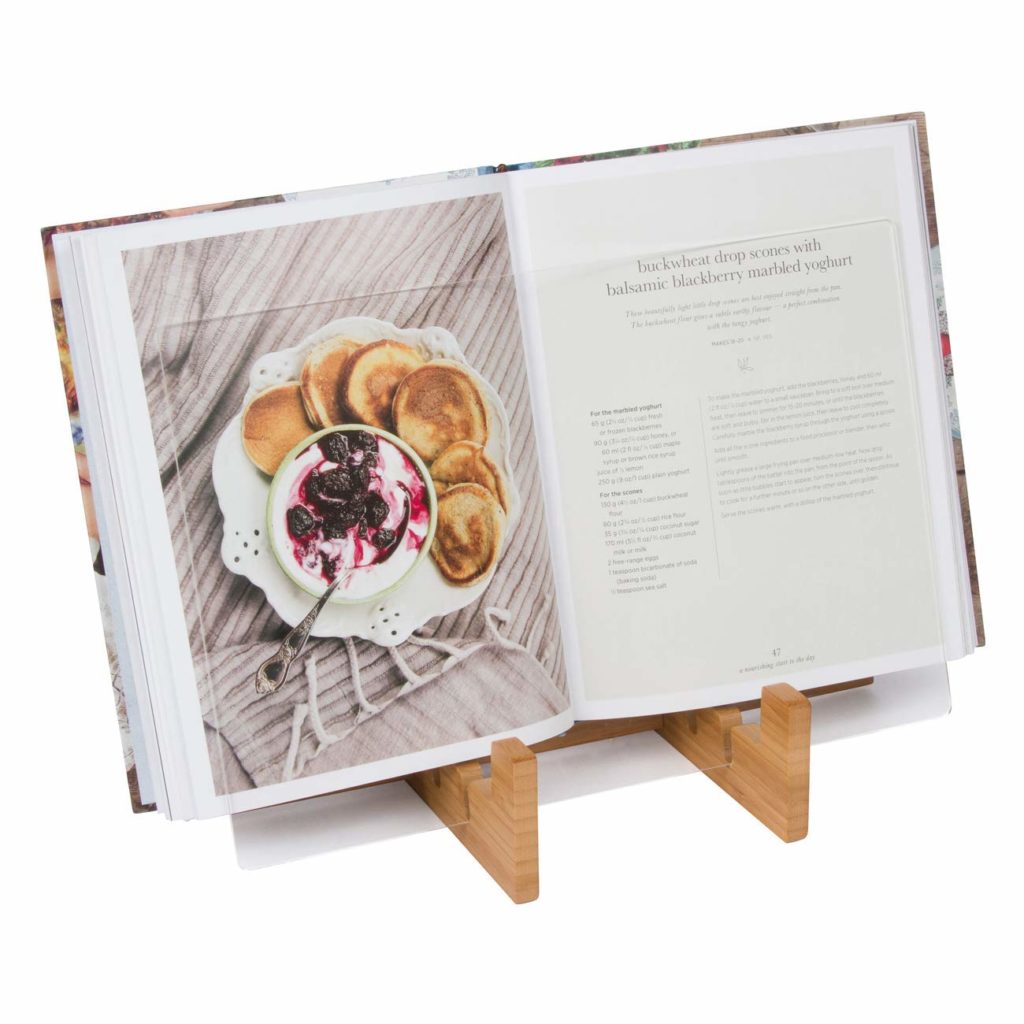
Where To Find A Quality Recipe Book Holder

Finding out where to buy a recipe book holder is made considerably easier if you have a computer and can look online. A recipe book stand is an extremely useful piece of equipment to have in your kitchen, as it keeps your workplace tidy and makes it easier to look at your recipe whilst mixing ingredients.

Most good kitchen outlets will have cookbook stands although as a general rule they will normally only be selling a particular brand. For instance, if you’re looking for an iron cookbook holder you may only be able to purchase this in certain stores.

Go online and search for all the different designs

Going online will give you the opportunity to look at several manufacturer’s designs, and will also enable you to compare prices and read reviews written by previous customers.

A clear acrylic recipe book holder can be viewed online at Amazon and several other retailer’s sites. These holders can be purchased at a reasonable price and are particularly useful if you are a messy cook, as they are easy to clean and provide good protection for your books.

Iron holders are very popular and add a touch of elegance to the kitchen, particularly in an older property. They are decorative, practical, and strong, and hold the pages of your cookbook down with weighted cords. They do not, however, have protective coverings so if this is an issue you can always provide your binder with a beautifully designed cover.

Wooden recipe book holders are always acceptable, and most come with a tab that will hold the pages in place. The beauty of a wooden holder is that if you decide to change the décor, you can always paint it the color you want to blend in with the rest of the kitchen. Once again, they normally do not come with a protective covering.

A comprehensive search for a good cookbook stand is important

All these recipe book holders can be found by searching online. It’s so easy to carry out a comprehensive search in order to be sure that the one you eventually choose is both the best one for your kitchen, and is also the cheapest one you can find in the design of your choice.

Kaddo Bourani – Pumpkin and Lamb

I first skilled Afghan delicacies once I moved to the D.C. area. There became an area on Route 1 in Alexandria that wasn’t fancy however the meals became great. All had been first-rate however I’ve had a gentle spot for pumpkin all my life (lengthy earlier than it have become trendy). So of the 3 dishes, I have become a fan of Kaddo.

I like to feature the lamb for a few more taste and protein boost.

Kaddo Bourani

For the pumpkin:

  • Four cups of cubed and peeled pumpkin
  • 2 tbl of olive oil
  • 1 tsp cinnamon
  • 1/four cup of coconut sugar (you may use white sugar however I choose coconut sugar due to the fact its low glycemic index. Some recipes additionally name for greater sugar – plenty greater – however in case you get a very good pumpkin just like the amber cup pictured on this post, you won’t want the more calories).

For the yogurt sauce:

  • 1 cup cashews soaked for an hour
  • 2-three garlic cloves, minced
  • 1 tsp lemon juice
  • 1 tsp dried mint
  • half of tsp salt
  • For the beef sauce:
  • 1/four cup olive oil or ghee
  • 1 massive onion, finely diced
  • 1 pound grass-fed floor lamb (you may use floor red meat however lamb is traditional)
  • 1 massive tomato, seeded and finely chopped
  • 2 massive garlic cloves, minced
  • 1 1/four tsp floor coriander
  • 1 half of tsp salt
  • 1 tsp freshly floor pepper
  • half of tsp floor turmeric

Instructions:

  • Preheat oven to 300 degrees.
  • Wash the outdoor of the pumpkin. Cut in half. Scrape out the stringy stuff and seeds at the inside.
  • Cut halves into three″-four″ portions or so.
  • Peel the pumpkin portions.
  • Place pumpkin portions in a massive bowl. Drizzle with the oil after which sprinkle with sugar and cinnamon. Mix till all portions are coated.
  • Place the pumpkin portions in a pan massive sufficient to preserve the portions in a unmarried layer. I line the pan with parchment paper to make for simpler smooth up.
  • Cover the pan with aluminum foil. Bake for two half of hours, then baste the portions with the pan juices, cowl them up again, and bake for every other forty five minutes.
  • The pumpkin portions ought to be darkish orange and translucent.

Make the yogurt sauce:

  • Drain cashews and mix in a excessive velocity blender with lemon juice and a sprint of sea salt till smooth.
  • Add garlic and mint, pulse to mix.
  • Cover and refrigerate till equipped to serve.

Make the beef sauce:

  • Brown the onions withinside the oil in a heavy-bottomed saucepan.
  • Add the beef and prepare dinner dinner over medium-excessive heat, stirring, till it’s far damaged up into small portions and the pinkness is sort of totally gone.
  • Add all different ingredients (besides molasses) and prepare dinner dinner, convey to a boil.
  • Lower the warmth and allow simmer, covered, for approximately 15 minutes.
  • Uncover, upload molasses and allow reduced.
  • Add 2 tablespoon of yogurt sauce and blend thoroughly.

Serve:

Hot pumpkin, pinnacle with yogurt sauce then warm meat sauce.


- PAGE 1 OF 2 -

Next Page  

loading
×