History, Tradition, and Flavor of Kaddo Bourani
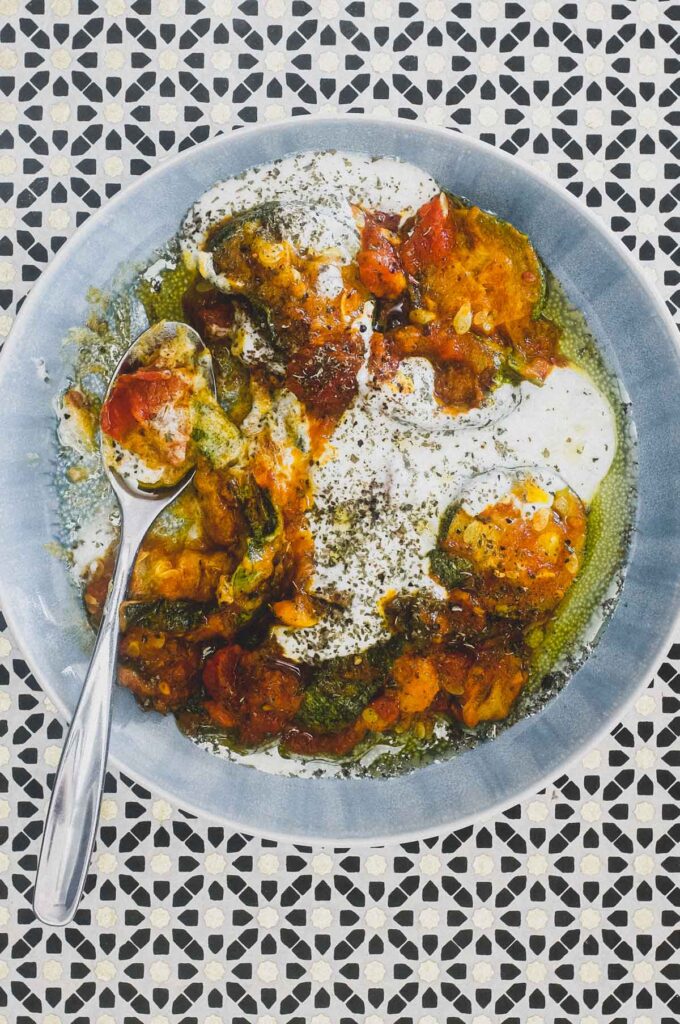
Kaddo Bourani (also spelled Kadu Bouranee, Borani Kadoo / Borani Kadu, Kaddo Bowrani, etc.) is among the most beloved and distinctive dishes of Afghan cuisine. At its core, the dish combines pumpkin (or squash) with a yogurt-based sauce, sometimes complemented by a savory meat or tomato sauce, creating a rich medley of sweet, savory, and tangy flavors.
Beyond its delicious taste, Kaddo Bourani carries a deeper culinary and cultural heritage — rooted in regional food traditions, linguistic history, and the broader historical movements that shaped Afghan cooking. In this article, we’ll explore what is known of its history, how it fits within Afghan (and broader Persianate) culinary traditions, and how it has evolved, especially as the world beyond Afghanistan discovered it.
What the Name Means — A Clue to Its Roots
Understanding the name “Kaddo Bourani” helps illuminate how culinary traditions and language blend to give identity to dishes:
- “Kaddo” (or “Kadu” / “Kadoo”) — means “pumpkin” (or squash) in Dari, one of the main languages of Afghanistan.
- “Bourani” (or “Borani” / “Bouranee” / “Borani Kadoo / Kadu Bouranee”) refers to a class of dishes based on yogurt and cooked vegetables (or sometimes meat), originally from Persian culinary traditions — often served as appetizers or sides.
Thus, the name literally means “pumpkin with yogurt (or vegetable)-based yogurt dish” — a fusion of the local produce (pumpkin) with culinary design from Persianate cuisine. This hints at a multi-layered heritage: a local Afghan ingredient expressed through broader regional cooking vocabulary.
Borani: The Persian Culinary Legacy
To understand Kaddo Bourani’s deeper origins, we must consider the broader tradition of Borani. Borani refers broadly to dishes where vegetables are boiled or sautéed, sometimes with rice or bulgur, then topped with yogurt (often garlic-mint yogurt). The earliest documented Borani dishes come from ancient Persian cuisine, where yogurt sauces over vegetables or cooked greens were popular.
Over centuries, the cuisine of the Persian world — through empires, trade routes, migrations, and cultural interactions — influenced what is now Afghanistan’s food traditions. As political borders shifted, Persian culinary notions (spiced stews, yogurt sauces, vegetable-based dishes) blended with local ingredients (pumpkins, squashes, regional herbs). Many dishes in Afghan cuisine carry this layered history. Afghan cooking draws from Persian, Indian, and Central Asian influences — due to Afghanistan’s geographic position at a crossroads of civilizations.
Thus, Kaddo Bourani can be seen as an Afghan manifestation of the older Borani tradition — reinterpreting Persian-style yogurt-vegetable dishes with a pumpkin base.
Kaddo Bourani in Afghan Food Culture
Use of Pumpkin (Kaddo) in Afghanistan
Pumpkin (kaddo/kadu) is a common vegetable in Afghanistan, appreciated for its availability, versatility, and nutritional value. Pumpkins (or squashes) are used in a variety of dishes — including braised pumpkin with spices and yogurt, especially in cooler months or when pumpkins are abundant.
In some accounts, because classic edible pumpkin varieties aren’t always easy to source, cooks substitute butternut squash or other winter squashes — which shows both flexibility and practicality, ensuring the dish survives even when certain varieties are unavailable.
How Bourani-Style Serving Fits Afghan Traditions
Yogurt is a staple in Afghan cooking. Yogurt-based sauces or condiments often accompany many traditional dishes, reflecting a culinary preference for acidic dairy additions that balance heavier or richer components.
By topping pumpkin (or squash) with a garlic-mint (or yogurt-garlic) sauce, Kaddo Bourani captures a classic Afghan flavor balance: earthy / sweet vegetable + creamy tangy yogurt + potentially savory meat sauce. Different regions or households may vary — some lean vegetarian with just pumpkin and yogurt, others add a spiced meat or tomato-meat sauce for more robust flavors.
Because of its relative simplicity and the common availability of its ingredients (pumpkin or squash, yogurt, garlic, spices), Kaddo Bourani has long been embraced as a home-cooked comfort dish — unpretentious yet flavorful.
Historical Uncertainties — What We Don’t Know
Despite its popularity today, there is surprisingly little documented history about when exactly Kaddo Bourani emerged as a dish, and how early Afghans began combining pumpkin with yogurt-based sauces. Several factors contribute to this uncertainty:
- Pumpkin itself is not native to Central Asia / Afghanistan. Most pumpkins originate in the Americas, and their global spread occurred after Columbus. Because pumpkin agriculture and culinary use outside the Americas likely became widespread only after the 15th century, it is improbable that an ancient “pumpkin + yogurt” dish existed in pre-modern Afghanistan in the same form.
- Written records are scarce. Traditional Afghan cooking has often been passed down orally, within families and communities — not in codified cookbooks. As a result, dishes like Kaddo Bourani rarely appear in early historical texts. The older concept — “Borani” (vegetable with yogurt) — is documented in Persian records, but not necessarily with pumpkin.
- Regional variation and adaptation blurred “origin.” Over time, as culinary influences from Persia, Central Asia, India, and even the Ottoman sphere merged, many vegetable-yogurt dishes evolved. Thus the exact regional birthplace or “inventor” of a pumpkin-based borani is impossible to pinpoint.
Because of these factors, the earliest concrete references to “Kaddo / Kadu / Borani Kadoo / Kaddo Bourani” are relatively modern — in the sense of 19th or 20th century — rather than ancient.
Modern History & Globalization
Rise in Afghan Diaspora and International Awareness
As Afghan diaspora communities grew — particularly in North America, Europe, and Australia — exposure to Afghan cuisine among non-Afghan audiences also increased. Dishes like Kaddo Bourani became accessible, often featured in Afghan restaurants abroad.
One notable example is the use of caramelized pumpkin topped with garlic-yogurt sauce in Afghan restaurants, capturing the dish’s sweet-savory balance.
Food blogs, expatriate Afghan cooks, and cookbook writers also helped spread variations of the dish: some vegetarian, some with meat sauce, some using different types of squash.
Accordingly, many non-Afghans discovered Kaddo Bourani through restaurants or food media — often viewing it as emblematic of Afghan cuisine’s subtlety and balance.
Adaptations & Variations
Once transplanted into new culinary contexts, people began adapting the recipe to local ingredients, tastes, and dietary preferences. Some common adaptations include:
- Use of butternut squash or other winter squashes when sugar pumpkins are unavailable.
- Vegetarian or vegan versions emphasizing the pumpkin and yogurt components.
- Sweetened vs savory emphasis — some recipes lean into sweetness, others into savory spices.
- Cold / room temperature serving — sometimes the dish is served as an appetizer or side.
These variations reflect how flexible and adaptable the dish is — which likely contributes to its survival and popularity far beyond its place of origin.
Cultural Significance
Kaddo Bourani endures not only as a dish but also as a symbol of Afghan culinary heritage:
- Comfort & tradition: For Afghan families, dishes like Kaddo Bourani evoke memories of home, family gatherings, and hospitality.
- Fusion of influences: Combines New-World produce (pumpkin) with Old-World culinary traditions (Persian borani, Afghan spice blends, yogurt sauces).
- Versatility: Vegetarian, meat, sweet, or savory — Kaddo Bourani appeals to a wide range of diets and tastes.
Why the “History” of Kaddo Bourani Is Elusive
The history is elusive due to three main reasons:
- Pumpkin’s non-native origin – Pumpkins were only introduced after the Columbian exchange.
- Oral tradition – Recipes were passed down verbally, not in cookbooks.
- Cultural syncretism – Afghanistan lies at a crossroads of Persia, Central Asia, and South Asia, so dishes evolved from multiple influences.
The “history” of Kaddo Bourani is thus more a history of cultural exchange, adaptation, and tradition — rather than a linear origin story.
Broad Timeline of Evolution
- Ancient history: Concept of Borani in Persian cuisine — yogurt-vegetable dishes using local greens or root vegetables, not pumpkin.
- Post-Columbian era: Pumpkin spread globally and likely began to appear in Afghan kitchens in the 16th century onward.
- 19th–20th century: Pumpkin combined with yogurt in domestic Afghan cooking; variations appear regionally.
- Late 20th – early 21st century: Afghan diaspora spreads the dish abroad; recipes documented in blogs, cookbooks, and restaurants.
- Today: Adaptable and global — vegetarian, meat, sweet, savory — Kaddo Bourani represents Afghan culinary heritage.
What Kaddo Bourani Reflects
- Cultural resilience: Food traditions survive and adapt despite migration or political upheaval.
- Fusion and syncretism: Combines pumpkin from the New World with Persian and Afghan culinary traditions.
- Hospitality & comfort: Warm, shared dishes highlight values of generosity and home cooking.
- Diversity within simplicity: Humble ingredients create a dish rich in flavor, texture, and identity.
The history of Kaddo Bourani is the history of food itself: layered, evolving, and shaped by migration, trade, and culture. While the exact origin of pumpkin in Afghan borani is unclear, what is evident is the dish’s ability to blend tradition with adaptability.
Kaddo Bourani embodies Afghan culinary identity: a balance of sweet and savory, simple ingredients yet complex flavors, rooted in heritage yet evolving with time. For those who taste it — whether in Kabul, a diaspora kitchen, or an Afghan restaurant abroad — it’s more than a pumpkin dish; it’s a bite of history, culture, and home.

LEAVE A REPLY